
Your posture collapses when you stop thinking

You sit up straight. Shoulders back. Head up.
Ten minutes later you’re collapsed forward again without realising it happened.
That’s not laziness. That’s a nervous system that hasn’t encoded the new pattern yet, and overactive muscles that snap you back to the old one the moment your attention moves.
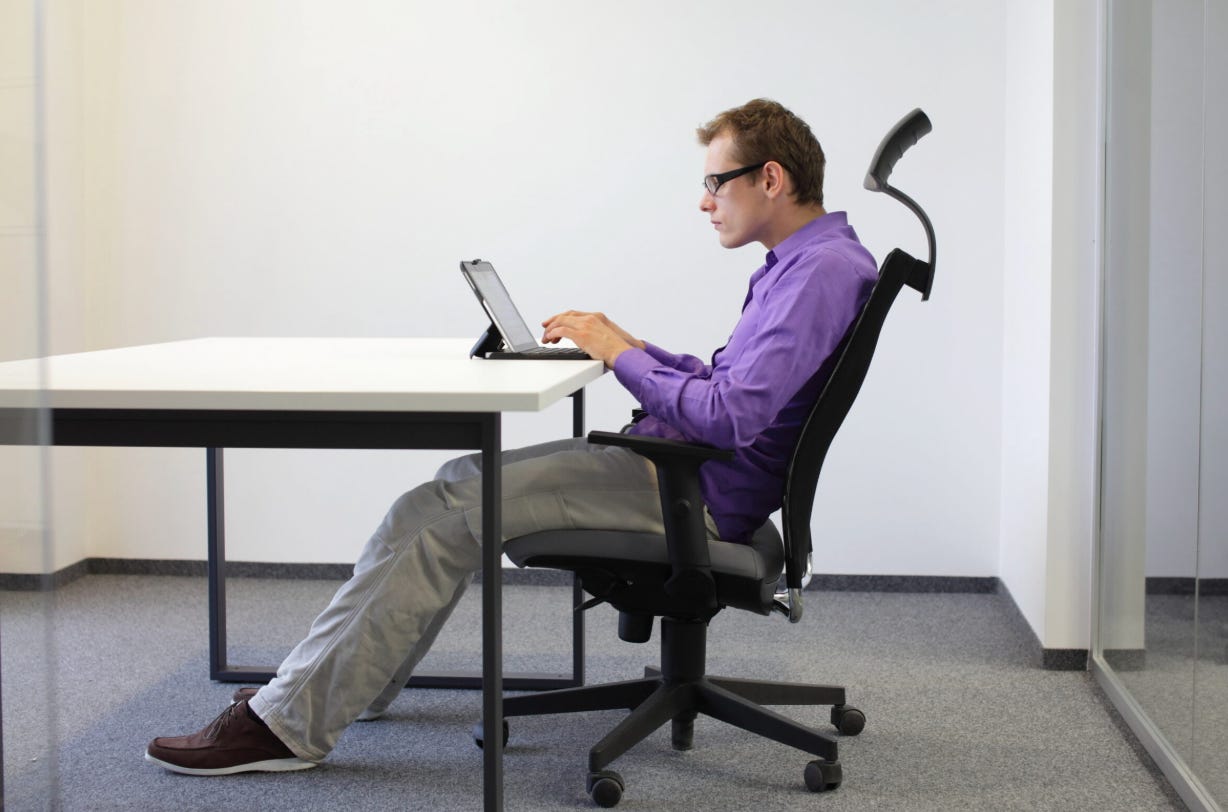
Bryan Johnson — the tech entrepreneur spending millions to reverse his biological age — found a ticking time bomb in his own body.
Not in his bloodwork. Not in his diet.
His internal jugular veins — the pipes carrying blood from his brain — were restricted by years of bad posture.
He was experiencing headaches. Brain fog. His specialist told him the long-term risks could include early cognitive decline.
He fixed it without surgery.
With five daily habits and two specific exercises nobody does at the gym.
If your posture collapses the moment you stop thinking about it, the deep postural muscles responsible for holding your head, neck, and spine in alignment automatically have never been trained — and your nervous system has encoded the collapsed position as default after years of screens and sitting.
Good posture isn’t a decision. It’s a muscle — and most people have never found it.
Here is the fix.
5 minutes only? Do the string visualisation and the deep neck flexor press right now.
One resets your baseline position. One starts building the muscle that holds it there automatically.
THE PROBLEM
This is postural motor pattern failure — or in plain English: your nervous system has encoded collapsed posture as home, and every time your attention lapses, it routes you back there automatically.
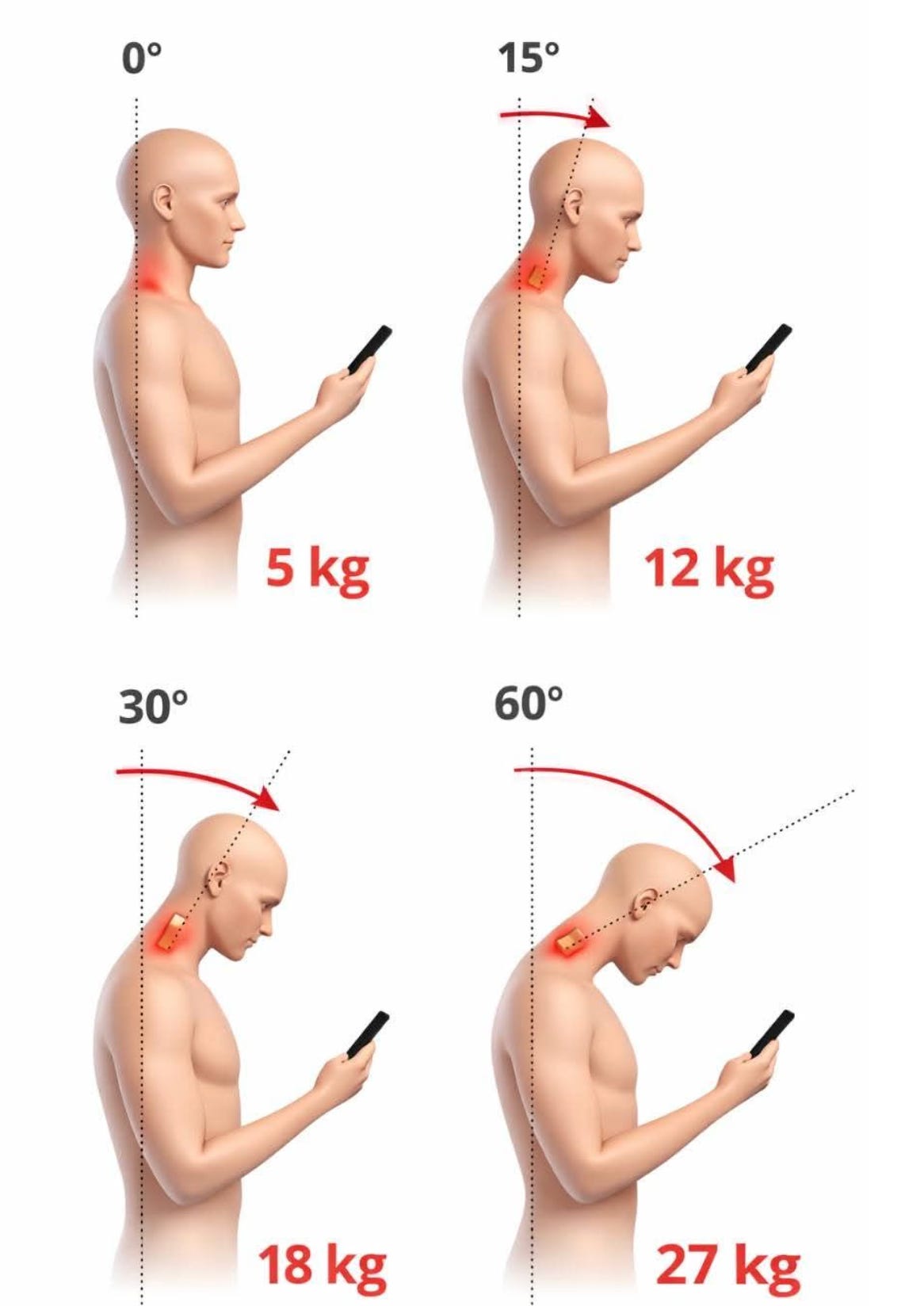
Research on cervical spine loading found that forward head posture adds approximately 10 pounds of load per inch of forward displacement — meaning the average desk worker carries an extra 30–60 pounds of effective load on their cervical spine for every hour they spend collapsed forward.
That load doesn’t just cause pain. It restricts blood flow, compresses nerves, and accelerates disc deterioration — all while feeling completely normal.
[Source: Hansraj KK. Assessment of stresses in the cervical spine caused by posture and position of the head. Surg Technol Int. 2014. PubMed ID: 25393825 → https://pubmed.ncbi.nlm.nih.gov/25393825/]
WHAT EVERYONE TRIES: Reminding themselves to sit up straight / phone reminders / ergonomic chairs
WHY IT FAILS: Awareness manages the symptom — it doesn’t build the deep postural muscles that make good alignment automatic. The moment your attention moves to your work, your nervous system routes you back to the encoded collapsed pattern
WHAT ACTUALLY WORKS: Two specific daily exercises that strengthen the deep postural muscles — the ones you’ll never hit with bicep curls or lunges — combined with 5 environmental habits that stop the forward pattern being constantly reinforced
The String That Resets Everything
Before any exercise. Before any reminder app.
Your nervous system needs a new starting position to encode. Give it one reference point — and use it every time you transition between tasks.
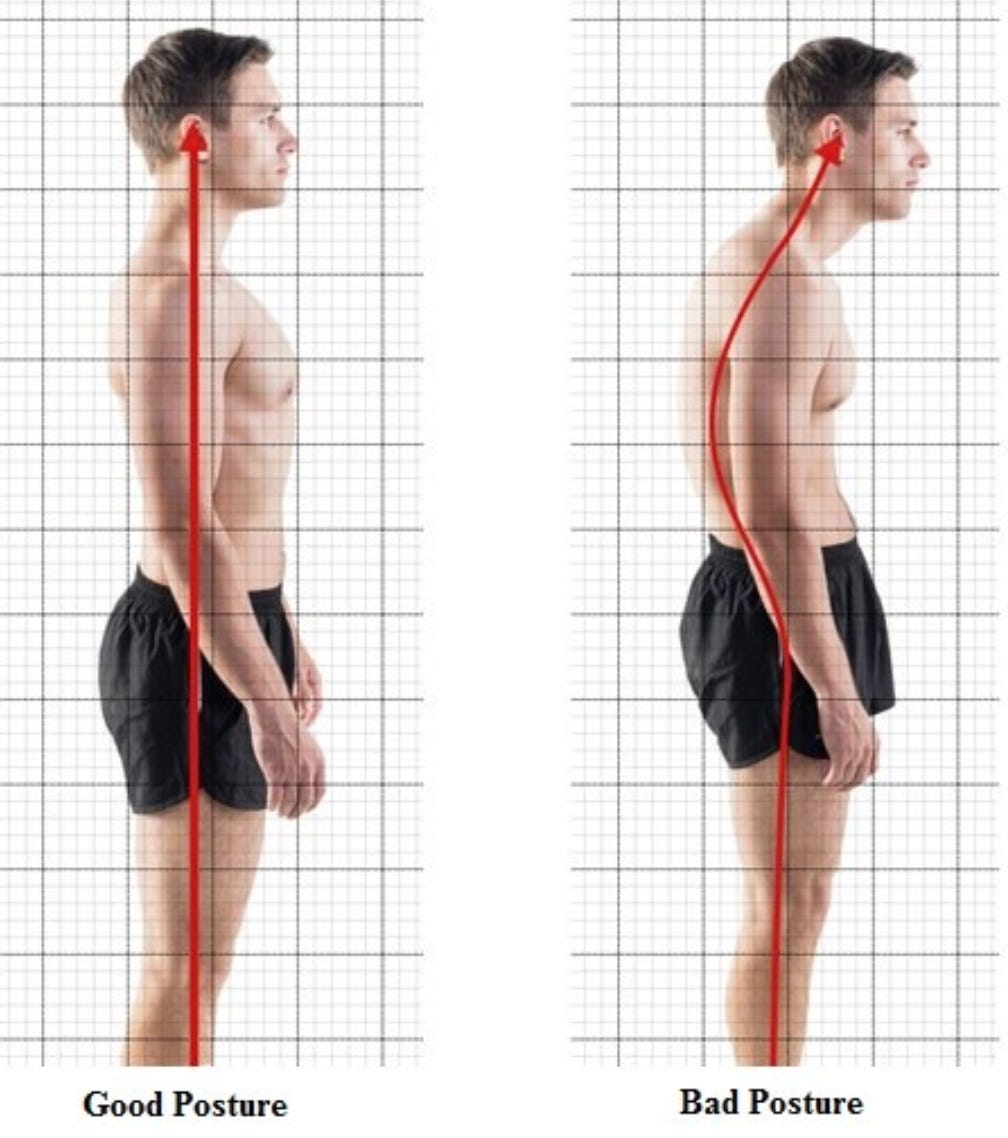
→ Imagine a string running through your spine, up through the crown of your head, pulling straight upward. Let your body lengthen into that pull — head level, chin slightly in, shoulders relaxed down. Hold 10 seconds every time you sit down, stand up, or pick up your phone. This isn’t posture maintenance. It’s a pattern interrupt — a moment that gives your nervous system a correct reference point to begin encoding as the new default.
The One Phone Habit That Changes Everything
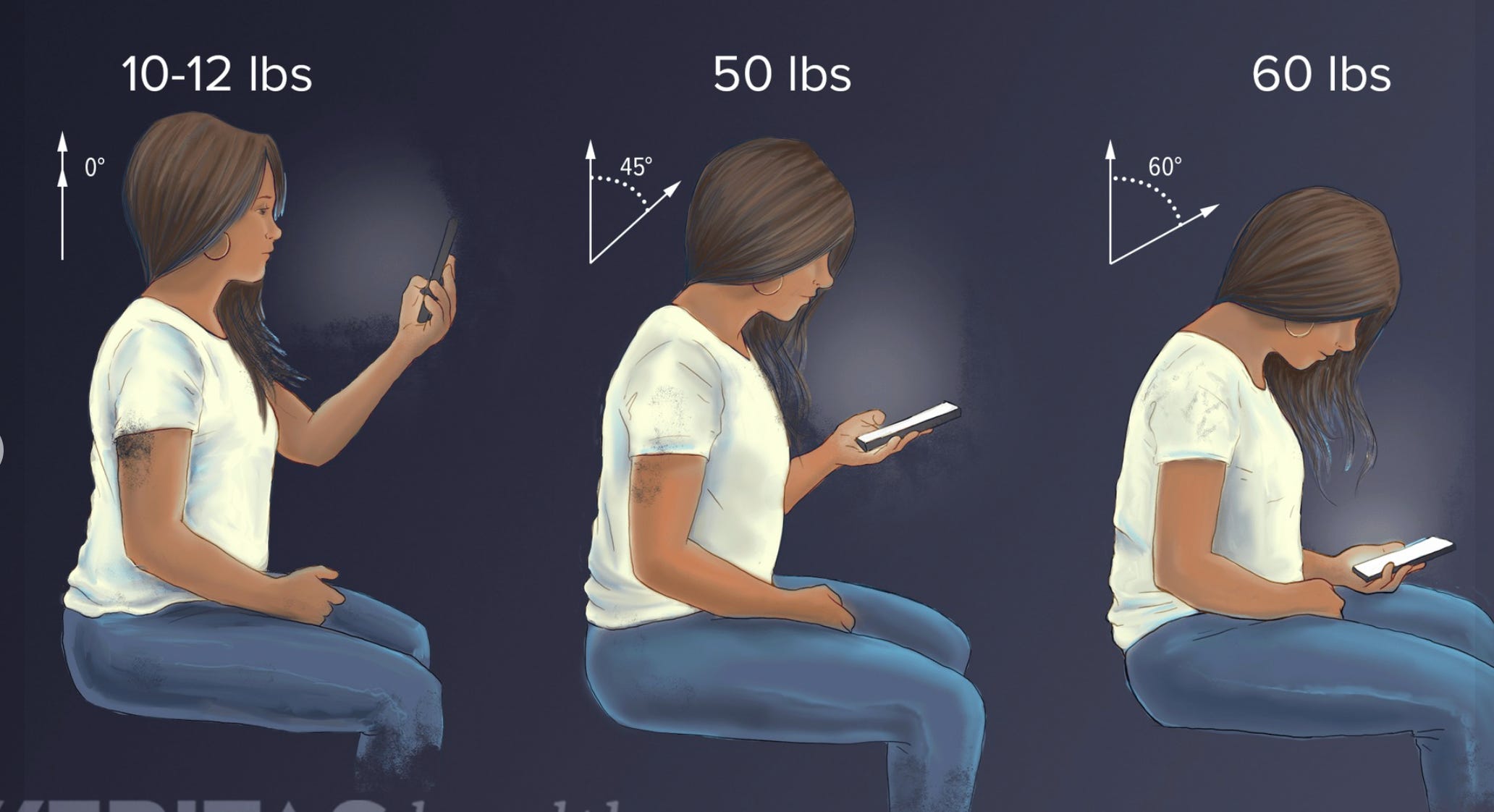
Your phone is the single biggest re-enforcer of collapsed posture in your day.
Every time you drop your head to look at your lap — you load your cervical spine, reinforce the forward pattern, and undo whatever work you did in your morning routine.
→ Hold your phone up to eye level — always. Yes, it looks odd. Do it anyway. Every time you drop your head to meet your phone — you are actively re-encoding the collapsed position your exercises are trying to undo. Bryan Johnson described feeling his jugular blood flow change the moment he dropped his head. You may not feel it that acutely — but the load is the same regardless.
Here’s the exact 2-exercise daily sequence that builds the deep postural muscles — the ones no gym programme touches — combined with the full 5-habit system and the week-by-week timeline for when good posture stops requiring effort.
Most people who try to fix their posture never find these two exercises. They’re not on any standard gym programme. They’re not in any generic stretching routine.
The full Posture Automation Protocol is inside — exact exercises, reps, hold cues, and the 30-day timeline for when good posture becomes your default — not your effort.
The Posture Automation Protocol: Reset → Strengthen → Encode
