
Your heel stabs with every first step

You wake up. Swing your legs over the edge of the bed.
Take your first step.
A knife stabs the bottom of your heel.
You hobble to the bathroom. It eases slightly. By noon it’s manageable.
Tomorrow — same knife. Same step. Same heel.
That’s not inflammation. That’s dead tissue. And everything you’ve been doing to treat it has been treating the wrong thing
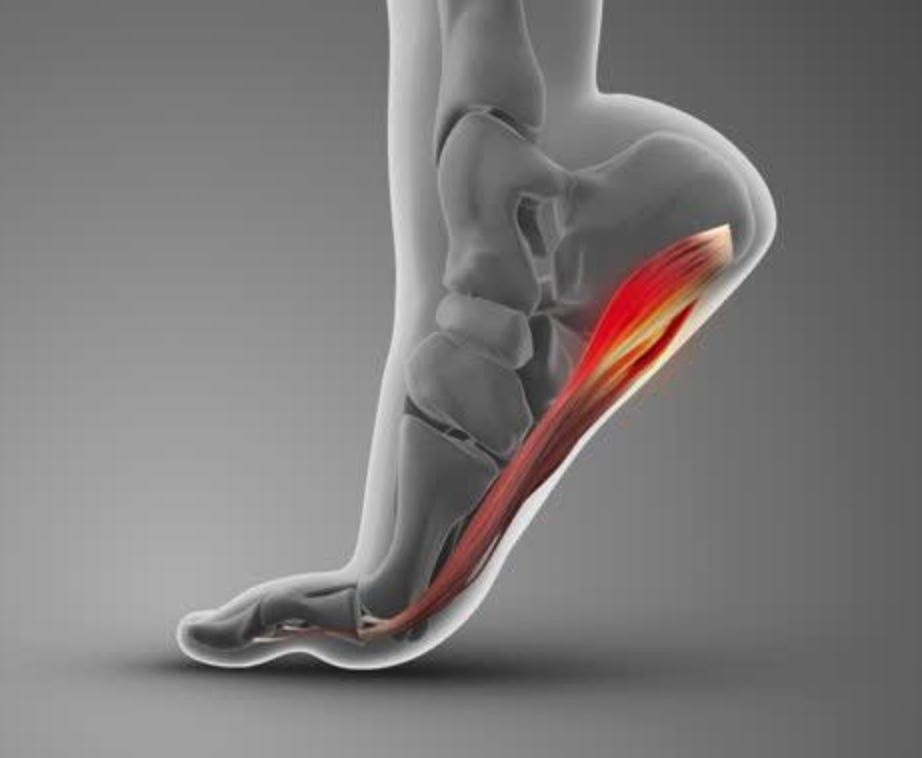
If your heel stabs with your first steps every morning and worsens the longer you stand — your plantar fascia tissue is degenerating, not inflaming.
The cause isn’t overuse. It’s restricted blood flow to a specific part of the bottom of your foot — caused by the position your footwear forces your big toe into every single day.
Here is the fix.
5 minutes only? Do the toe splay and the arch lift today.
That alone starts restoring the foot mechanics that allowed the blood flow problem to develop in the first place.
THE PROBLEM
This is plantar fasciosis — not plantar fasciitis — or in plain English: the tissue on the bottom of your heel is degrading from lack of blood supply, not inflaming from overuse.
In 2003, Dr. Harvey Lemont performed biopsies on 50 patients with severe plantar fasciitis whose pain hadn’t responded to any treatment.
There were zero signs of inflammation in all 50 samples.
What he found instead was necrotic tissue — dead or degrading tissue caused by restricted blood flow to the bottom of the foot.
The suffix “itis” means inflammation. There was none. Which is why every treatment targeting inflammation — ice, anti-inflammatories, cortisone injections — fails for close to 50% of people diagnosed with this condition.
[Source: Lemont H et al. Plantar fasciitis: a degenerative process (fasciosis) without inflammation. J Am Podiatr Med Assoc. 2003. PubMed: https://pubmed.ncbi.nlm.nih.gov/12756315/]
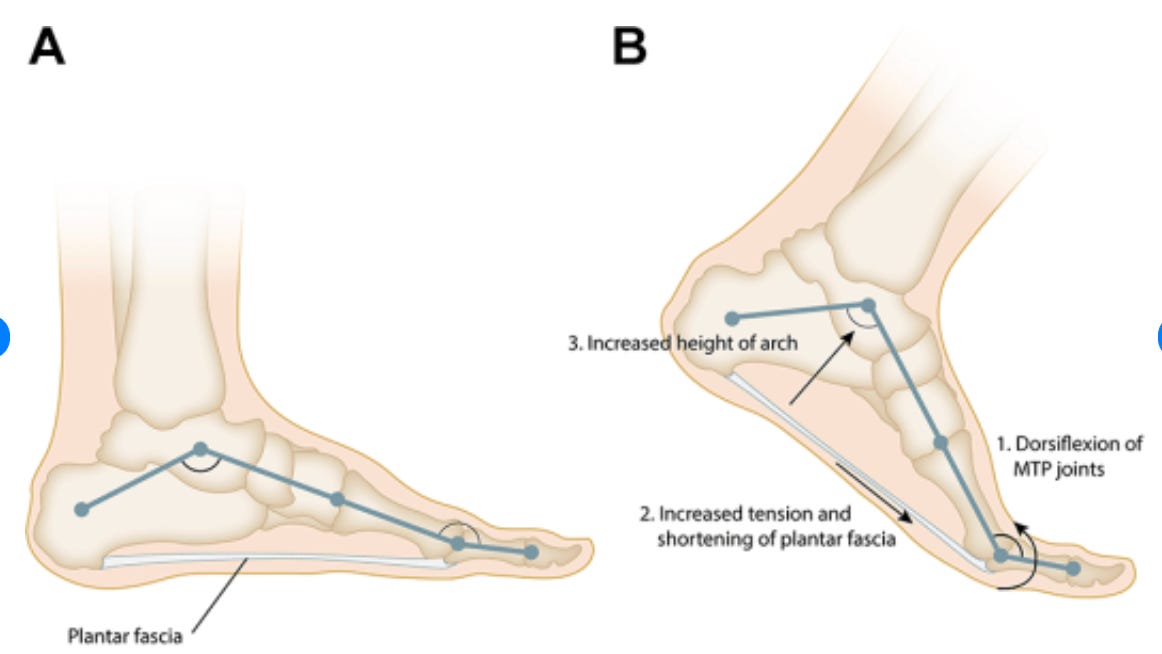
A 2019 study found that positioning the big toe into a narrow shoe created an immediate 60% drop in blood flow through the lateral plantar artery — the artery supplying the exact part of the foot where plantar fasciosis develops.
Two-thirds of participants showed no recovery in circulation — meaning narrow footwear was actively preventing the tissue from regenerating with every hour of wear.
[Source: Jacobs JL et al. Passive hallux adduction decreases lateral plantar artery blood flow. J Foot Ankle Res. 2019. https://jfootankleres.biomedcentral.com/articles/10.1186/s13047-019-0361-y]
DEBUNK THE OBVIOUS FIX
WHAT EVERYONE TRIES: Ice / rest / orthotics / cortisone injections
WHY IT FAILS: All four target inflammation — but biopsy evidence confirms there is no inflammation. The real problem is degenerating tissue from restricted blood flow caused by footwear compressing the big toe inward — and none of these interventions address that cause
WHAT ACTUALLY WORKS: Restore blood flow → restore foot mechanics → rebuild the plantar fascia tissue from the inside out — in that order
─────────────────────────────
“Close to 50% of people diagnosed with plantar fasciitis still have foot pain 15 years after it starts. That’s not bad luck. That’s a wrong diagnosis being treated with the wrong tools.”
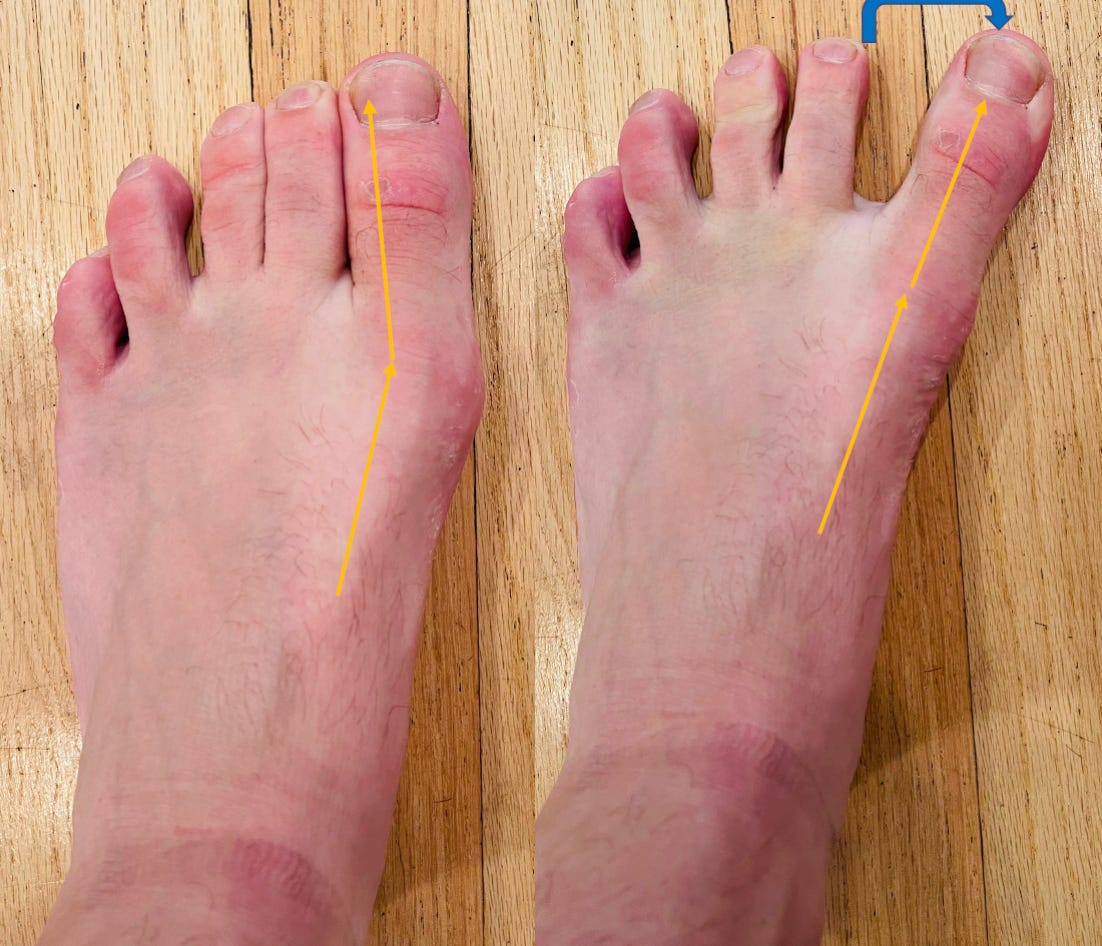
Understand What Your Foot Is Supposed to Do
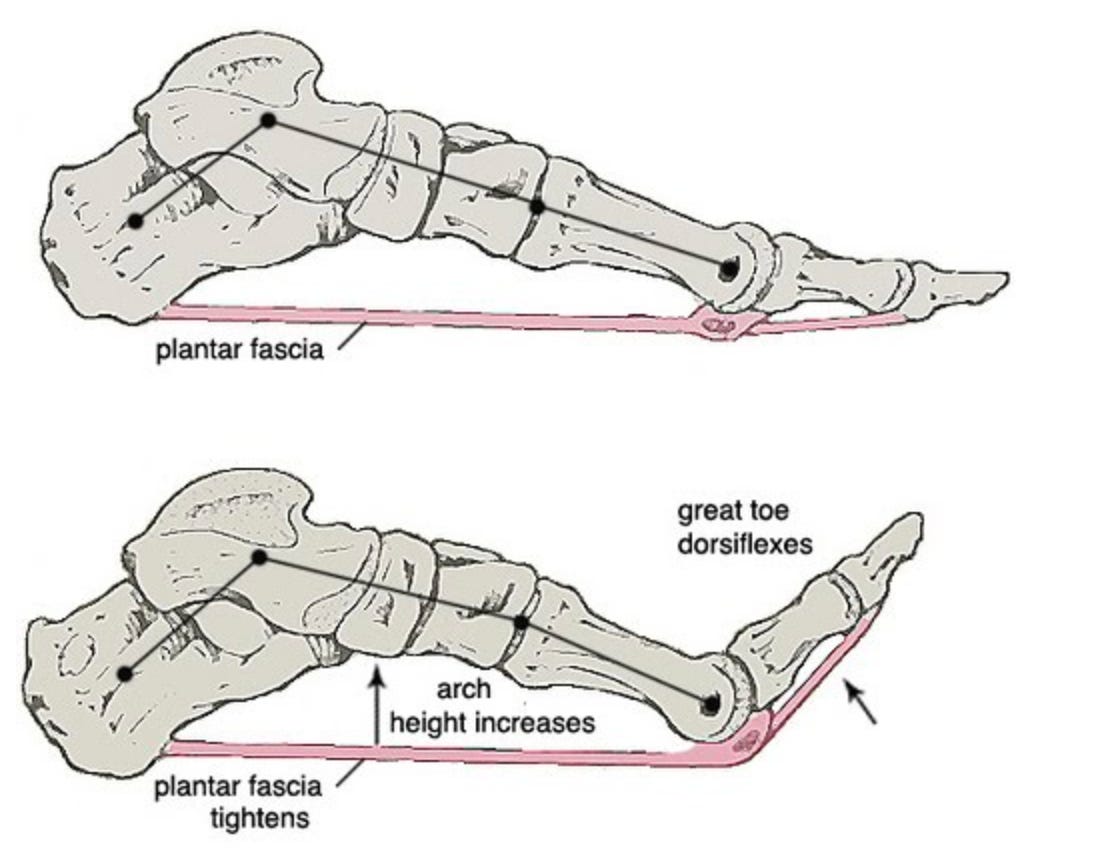
Your plantar fascia works like a rubber band.
At rest — relaxed. Mobile. Absorbing load.
The moment your toes extend and your foot hits the ground — it pulls taut, stiffens the arch, and transforms your foot into a rigid platform that propels you forward.
This is called the windlass mechanism. It’s the reason you can walk efficiently. When the tissue degrades — this mechanism fails. Every step loads a structure that can no longer do its job.
→ The fix doesn’t start with stretching the plantar fascia. It starts with restoring the foot mechanics and blood flow that allow the tissue to regenerate.
What Your Shoes Did to Your Big Toe
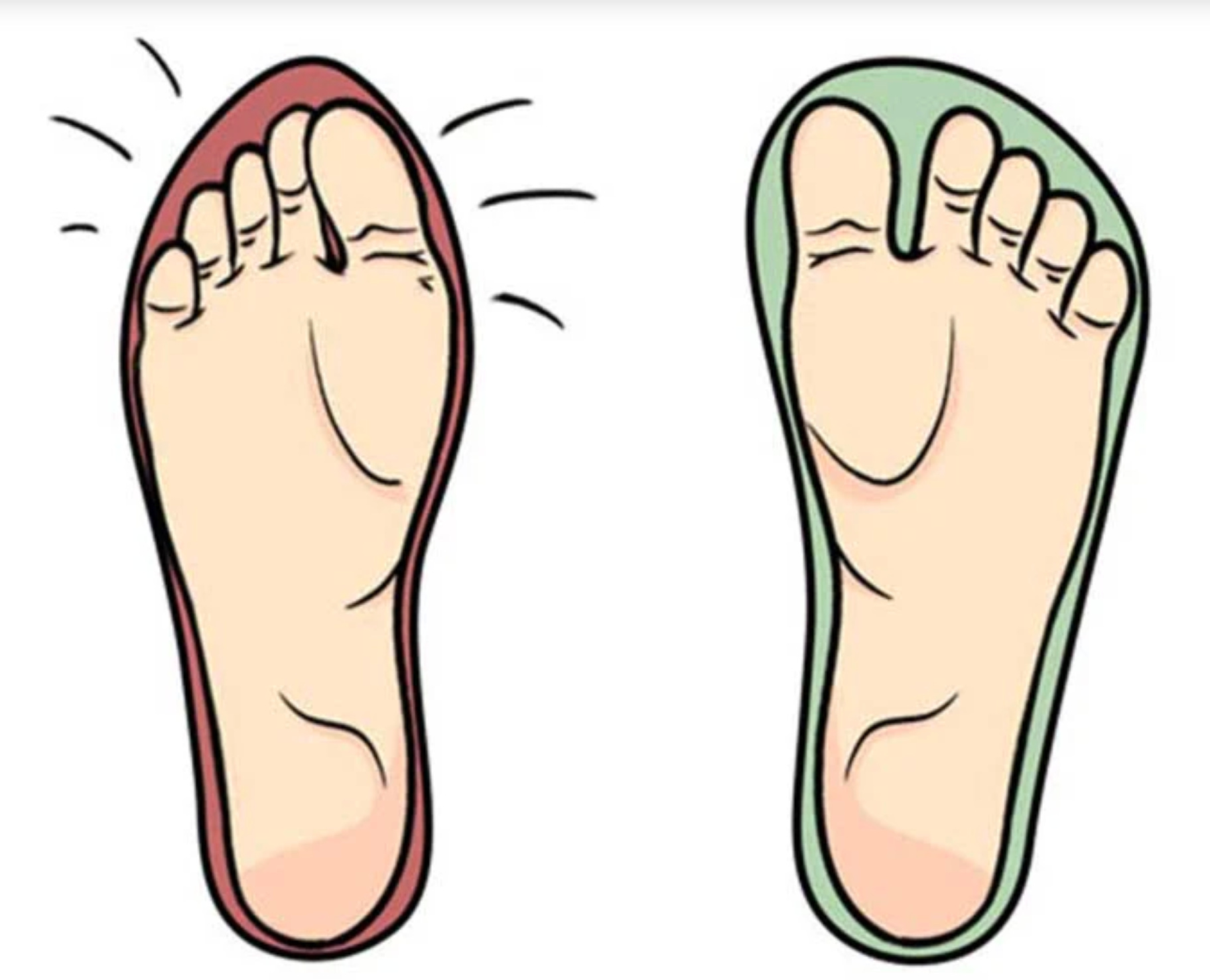
The abductor hallucis is a muscle on the inside bottom of your foot — just under your big ankle bone.
When your shoe pulls your big toe inward, this muscle gets stretched. That stretching pinches the lateral plantar artery running underneath it — cutting blood flow to the tissue that’s already struggling to regenerate.
Most people don’t feel this happening. Their foot looks healthy. There’s a pulse. The skin is normal.
But two-thirds of people put into a narrow toe box position show significant, sustained drops in blood flow to the exact spot that hurts.
→ The shoe isn’t just uncomfortable. It’s actively preventing your foot from healing every hour you wear it.
─────────────────────────────
👤 Before the full rebuild protocol.
If you already know the problem is your posture and foot mechanics — and you want it fixed properly, with someone looking at your specific pattern:
Apply for 1-on-1 coaching with Dylan.
→ Personal posture audit from your photos and video
→ Fix plan built around your body — not a template
→ Monthly 1-on-1 video call to recalibrate
→ Direct DM access — 24-hour response window
→ Plan rebuilt every 30 days based on your data
Spots are limited. Applications reviewed manually. Not everyone gets in.
─────────────────────────────
Here’s the exact rebuild sequence — restore blood flow, restore mechanics, rebuild tissue — and why doing these in the wrong order means the degeneration continues regardless of how much you stretch.
Most plantar fasciitis protocols give you calf stretches and arch exercises. Neither addresses the blood flow restriction that’s causing the tissue to die in the first place.
The full Plantar Fascia Rebuild Protocol is inside exact steps, progressions, and the week-by-week timeline for when the morning knife stops.
