
Stop stretching your stiff lower back

Your lower back is stiff.
You do a cat-cow. Child’s pose. Knees to chest.
It loosens for 20 minutes. Then the stiffness is back — slightly worse than before.
That relief isn’t healing. That’s your injured disc getting pulled on — and sending your brain a brief signal that overrides the pain. The damage continues underneath.
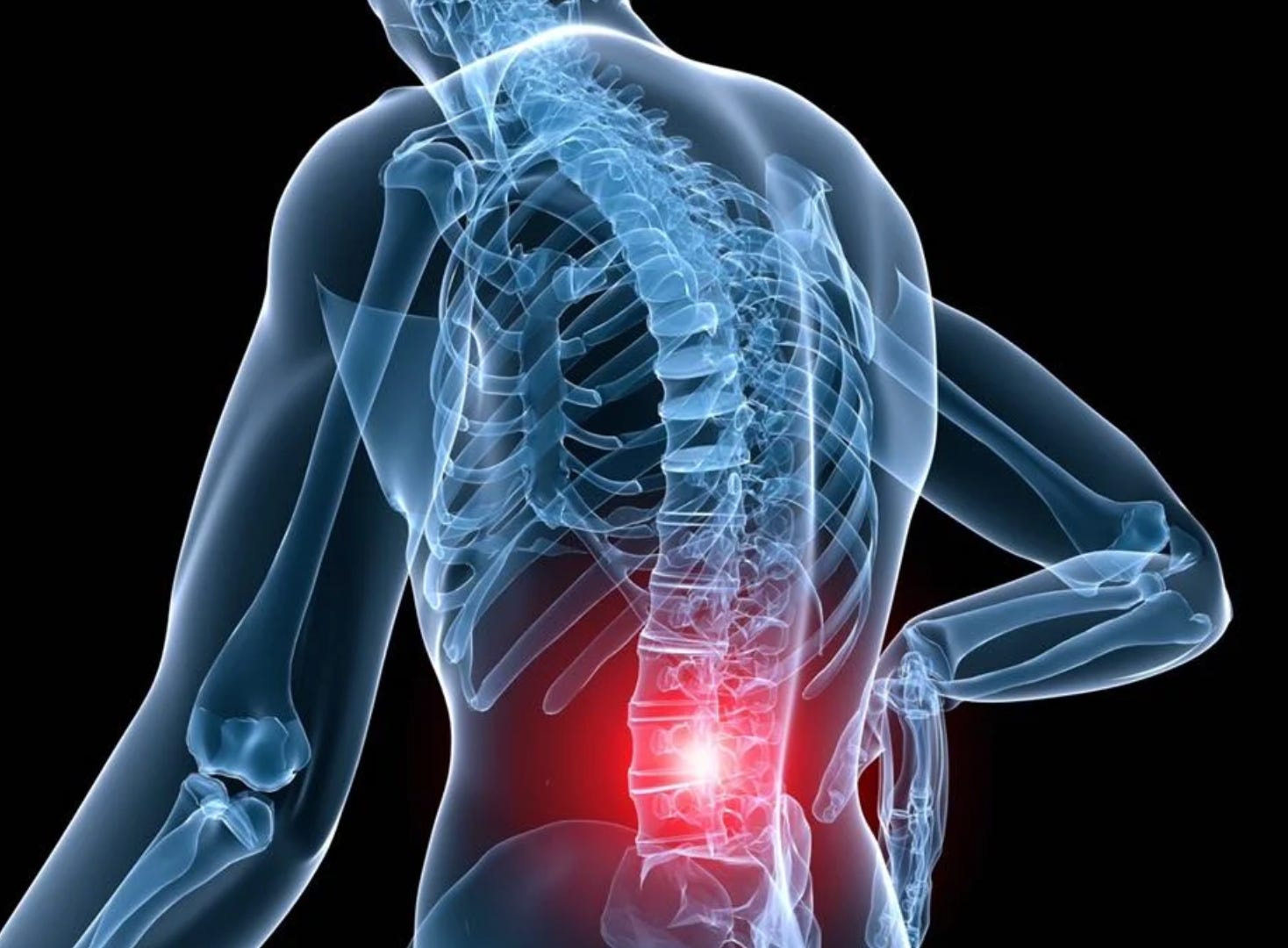
A 44-year-old marketing director in Bristol had been doing a 10-minute stretching routine for his lower back every morning for five months.
Cat-cows. Child’s pose. Knees to chest. Everything his physio recommended.
His back felt slightly better after each session.
By afternoon — stiff again. Worse than the morning before.
His lumbar curve had flattened from years of sitting. His stretching routine was bending his spine further into the position that caused the problem — pulling on healing tissue every single day.
He wasn’t failing to stretch enough. He was stretching the wrong way at the wrong time.
If your lower back stiffens daily and brief stretching gives you temporary relief that never lasts, your spine has lost its natural lumbar curve from years of sitting — and the forward-bending stretches everyone recommends are loading the same tissues that are trying to heal.
Stiffness is not a flexibility problem. It’s a stability and structural problem. The fix is the opposite of what you’ve been told.
Here is the fix.
THE PROBLEM
This is lumbar curve loss combined with flexion-biased pain — or in plain English: your natural lower back curve has been flattened by years of sitting, and every forward-bending stretch feeds the exact movement pattern that injured the tissue in the first place.
Think of it like a sprained wrist. You wouldn’t keep forcing a sprained wrist to bend to loosen it. You’d protect it, let it heal, then strengthen it.
Your lower back operates under the same principle. The stiffness you feel isn’t your spine asking for more flexibility. It’s your body guarding the injured structure.
More bending — even gentle bending — reopens the healing tissue and resets the recovery clock
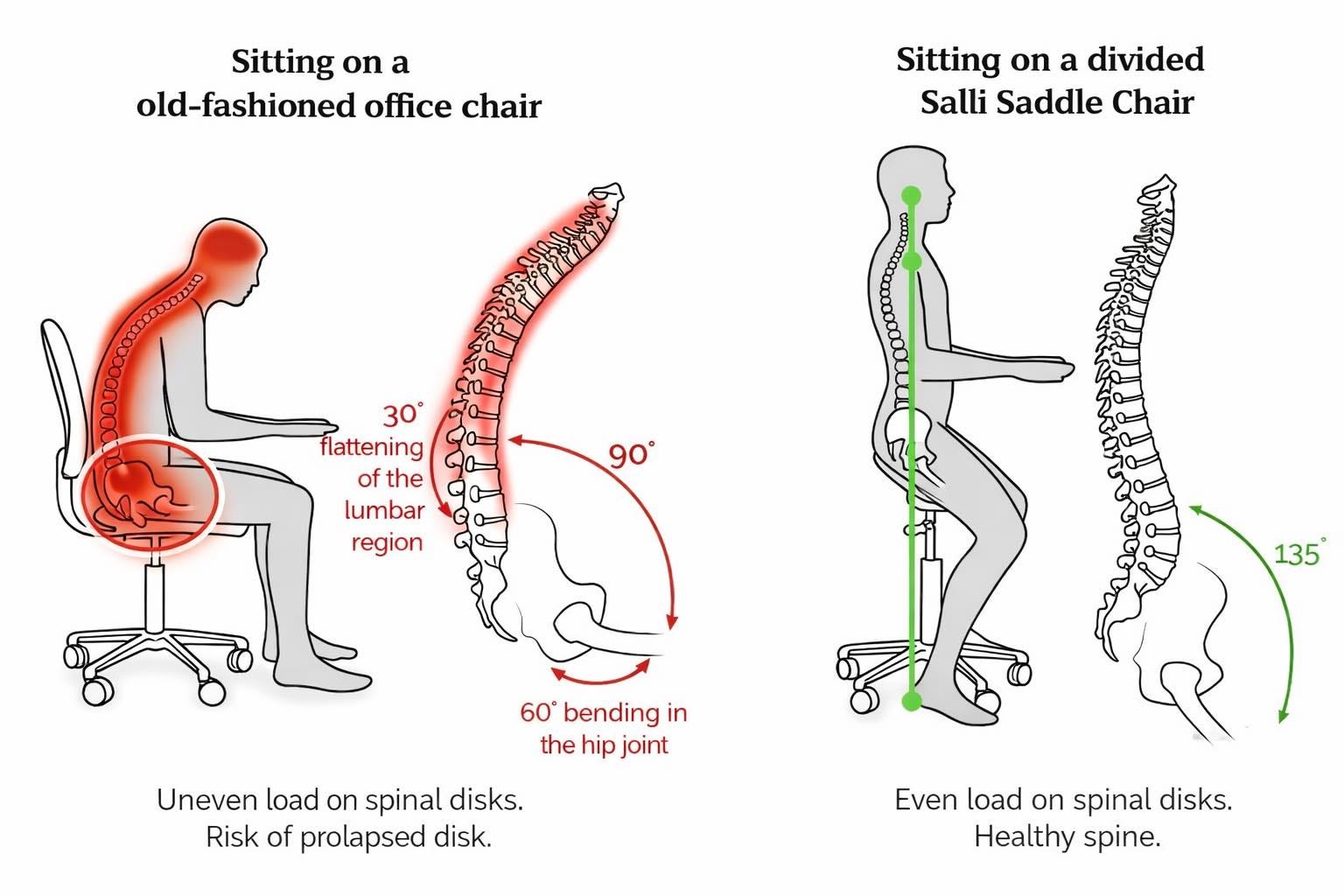
Clinical assessment of patients with chronic lower back pain has found that even when they stand up straight, their lower spine remains rounded — meaning years of sitting had structurally altered the resting position of the lumbar spine.
Research consistently confirms that most back injuries occur through forward flexion — sitting, slouching, or lifting with a rounded spine — making repeated forward-bending stretches a direct re-loading of the same mechanism that caused the original injury.
[Source: Back In Shape Program clinical framework — verify via PubMed: search “lumbar flexion back injury disc herniation flexion intolerance” before publishing. Supporting study: McGill SM. Low Back Disorders. Human Kinetics, 2007.]
WHAT EVERYONE TRIES: Cat-cows / child’s pose / knee-to-chest hugs / forward bending stretches
WHY IT FAILS: Most lower back injuries happen through forward flexion — sitting and slouching flatten the lumbar curve and stress the disc. Forward-bending stretches repeat the same motion on tissue that’s already injured and trying to heal. The brief relief is neurological — the stretch receptors override the pain signal temporarily. The damage continues.
WHAT ACTUALLY WORKS: Restore the natural lumbar curve through gentle backward decompression → teach neutral spine alignment → strengthen the hips and lower back to protect the restored curve — always in that order
Lower back pain killing you? Do this 6-move no-equipment routine for fast relief:
What Your Back Actually Needs Instead
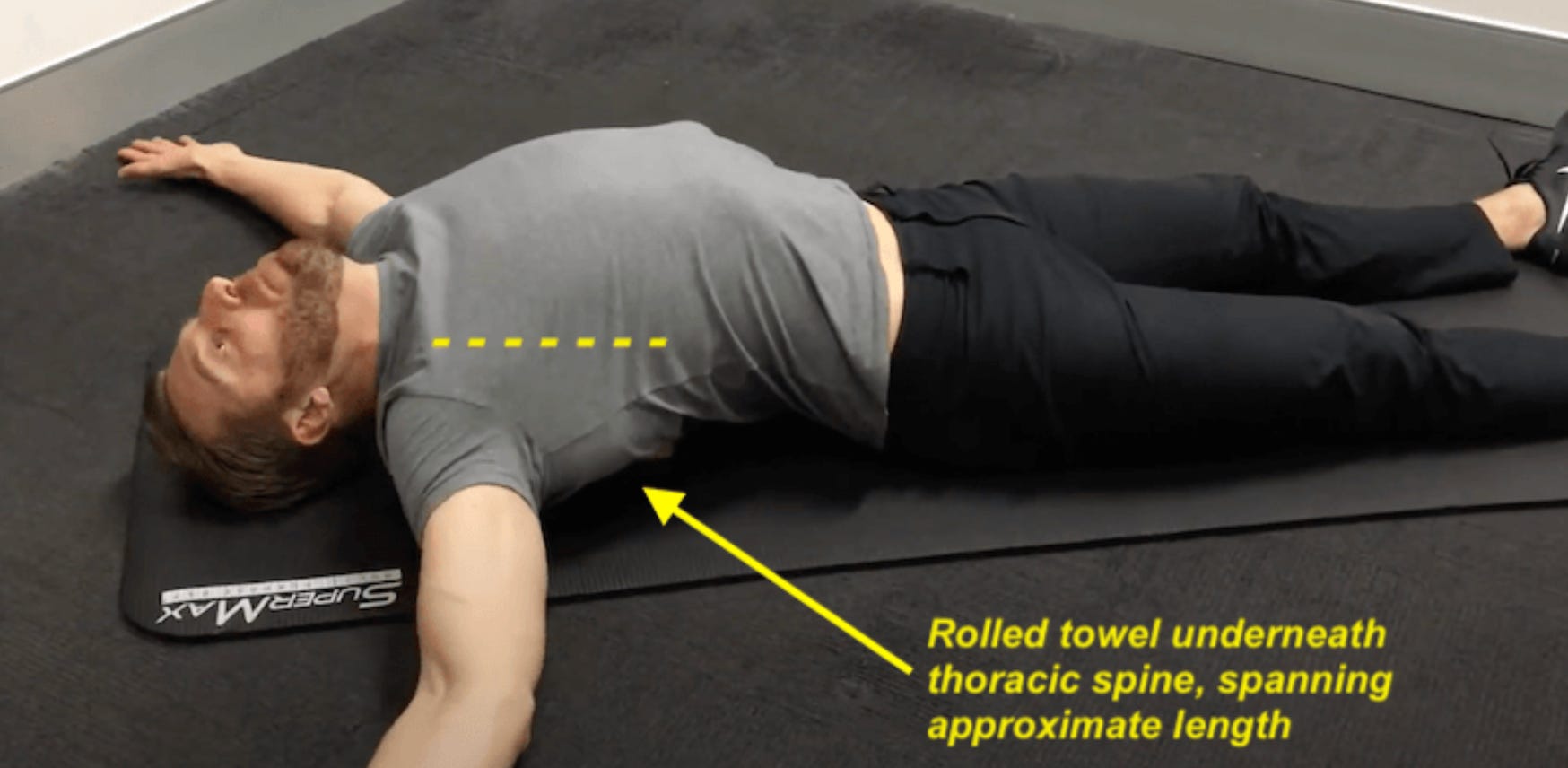
Your spine adapts to whatever position you spend most time in.
Nine hours a day slumped over a desk — and your spine learns to stay slumped, even when you stand up. The stretches feel good because they match the position your body has adapted to. They don’t reverse it.
What reverses it is gentle backward loading — restoring the curve by working in the opposite direction of where the damage occurred.
→ Lie on your back. Place a rolled towel under your lower back — positioned at the natural arch, not the flat part. Lie there for 5 minutes. Let gravity do the work. This passively restores the lumbar curve without loading the disc. It’s the opposite of child’s pose — and it’s where recovery begins.
Why Your Body Adapted and How to Reset It
Your body adapted to sitting. That means two things.
First — your lumbar curve flattened. Second — your movement patterns shifted to load the spine with flexion during everyday tasks like picking things up, getting out of a chair, or reaching forward.
Every time you bend with a rounded spine — you load the healing tissue again.
→ Stand up. Push your hips back. Let your chest come forward — keeping your lower back in its natural arch. That’s a hip hinge. Practice it before picking anything up from the floor — even a phone charger. This is the movement that takes load off the disc and puts it through the hips — where it belongs.
Tight hips usually aren’t lacking force. They need more rotation. With your legs on the wall for support, this drill helps the hips rotate while keeping the pelvis stable.
If you already know your back is the problem and you want Dylan to build your specific recovery plan — not give you a generic protocol:
1-on-1 with Coach Dylan. Founding Application. 18 of 20 spots left.
Dylan reads every application personally. If selected — he’ll reach out on WhatsApp directly.
Not everyone gets in.
→ Apply here (2 minutes): https://tally.so/r/441DXr
Not ready? Keep reading. The protocol below is free.
─────────────────────────────
Here’s the exact 3-step sequence — restore the curve, teach neutral alignment, build the strength that protects it — and why doing the stretches everyone recommends before this sequence means the tissue never gets the window it needs to heal.
The full Lower Back Stiffness Reset is inside — exact steps, progressions, and the week-by-week timeline for when the stiffness stops coming back every afternoon.
