
Stop doing hip thrusts before fixing this

A 2025 peer-reviewed study gave participants one stretch.
Five minutes daily. No gym. No weights. No strengthening exercises.
Six weeks later — their gluteal power had improved by 8.4%.
Not because they strengthened their glutes. Because they finally gave their glutes the range to work.
A 31-year-old product designer in Lisbon had been doing hip thrusts three times a week for four months.
She could feel her hamstrings working every set. Her lower back compensating on the heavy ones.
Her glutes — almost nothing. Just pressure, no contraction.
Her hip flexors had shortened from 9 hours of daily sitting — pulling her pelvis forward and physically restricting the range her glutes needed to reach full extension.
She wasn’t failing to activate her glutes.
Her hip flexors had locked them out of the movement entirely.
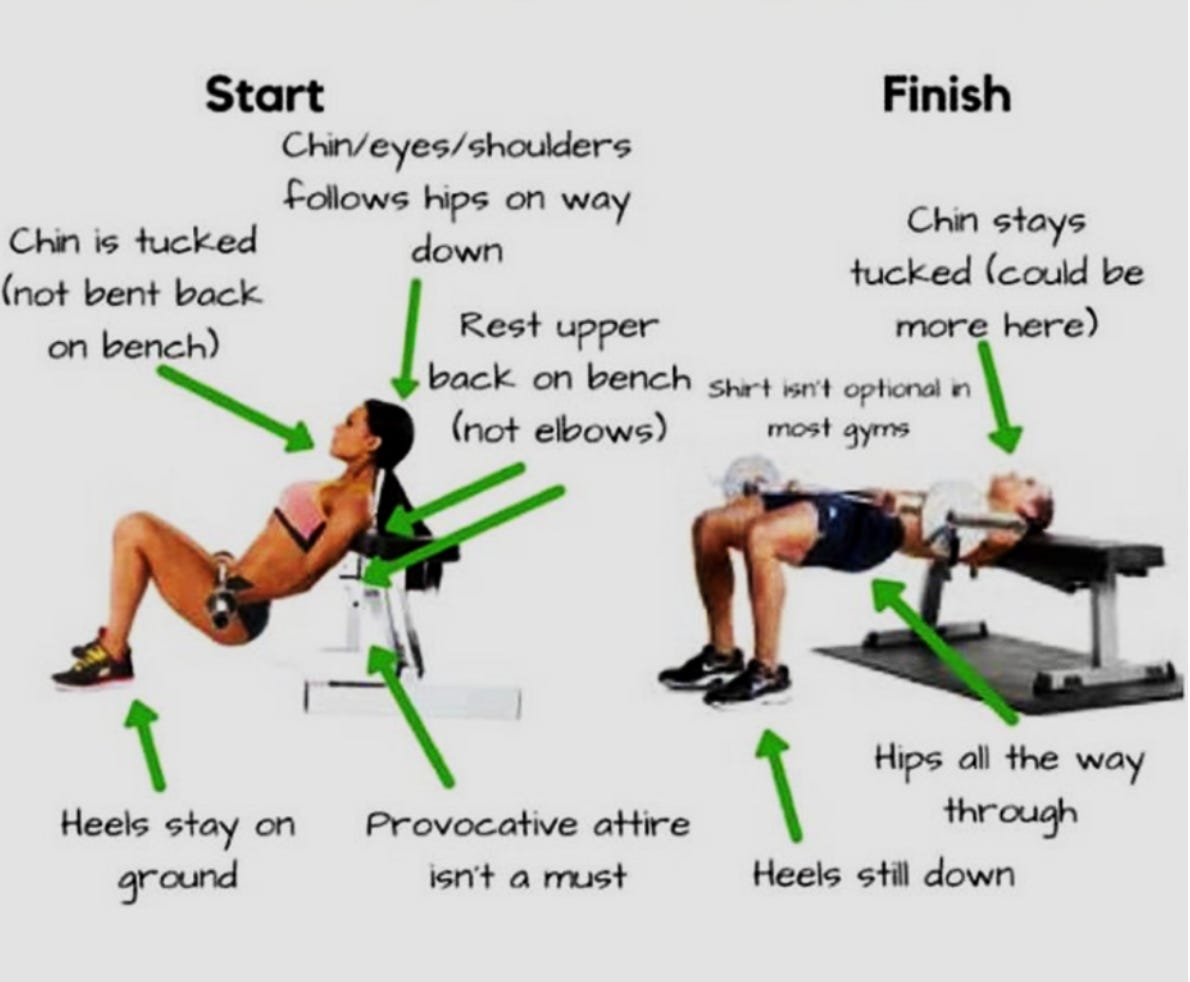
If your glutes won’t fire during hip thrusts, squats, or bridges — and you feel your hamstrings or lower back taking over — your hip flexors have shortened from prolonged sitting and are restricting the range of motion your gluteus maximus needs to generate force.
Research confirms it: individuals with restricted hip flexor length demonstrate decreased gluteus maximus activation during loaded movement. The fix isn’t more glute work. It’s restoring the range first.
Here is the fix.
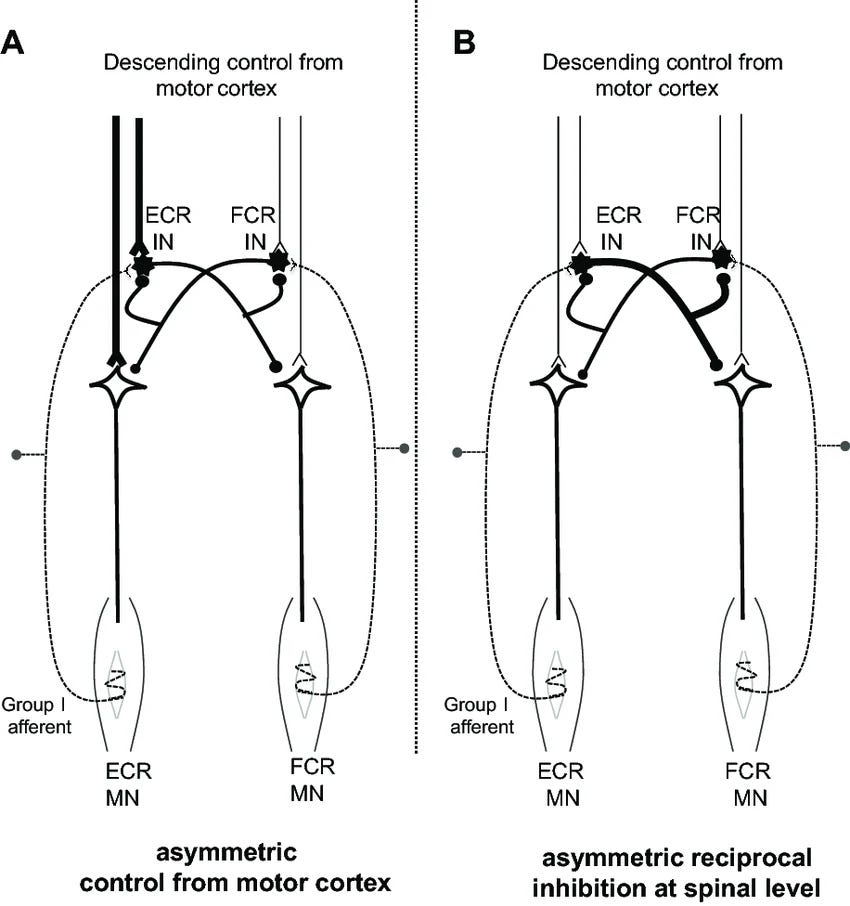
This is reciprocal inhibition from hip flexor shortening — or in plain English: your hip flexors and glutes are on opposite sides of the same joint. When the hip flexors shorten — they don’t just get tight. They neurologically inhibit the muscle on the other side.
Your glutes don’t fire fully. Not because they’re weak. Because the hip flexors are preventing them from doing so — through a mechanism that no amount of strengthening can override until the restriction is addressed first.
Americans now sit an average of 9.5 hours per day — substantially more than population studies from a decade ago. At 90 degrees of hip flexion for most of that time, the psoas and iliacus — the primary hip flexors — are in sustained shortening for the majority of every waking day.
The glutes on the other side are in sustained lengthening. Inhibited. Forgotten by the nervous system
.
A 2025 randomised cohort study published in the International Journal of Sports Physical Therapy tested one intervention: a daily lunge-and-reach stretch for six weeks.
No strengthening. No gym work. Just 5 minutes of stretching daily.
Results: hip flexor length improved significantly (mean change 5.92°, p=0.01) — and single-leg broad jump distance improved by 12.39cm (8.4% improvement, p=0.02) — a measure of gluteal power.
The stretching group improved gluteal power by more than twice the control group — with zero strengthening exercises added.
[Source: Ehresman BA et al. Improved Hip Flexibility and Gluteal Function Following a Daily Lunge-and-Reach Stretching Intervention. Int J Sports Phys Ther. 2025;20(6):814–823. PMID: 40469644 → https://pubmed.ncbi.nlm.nih.gov/40469644/]
WHAT EVERYONE TRIES: More glute exercises — hip thrusts, squats, glute bridges, band work
WHY IT FAILS: Loading a glute that can’t access its full range builds strength in a restricted window. The hip flexors are neurologically inhibiting the glute before the exercise even begins. More load doesn’t override inhibition — it just increases the compensation from the hamstrings and lower back that were already taking over.
WHAT ACTUALLY WORKS: Release the hip flexors first — restore the range the glute needs to reach full extension — then strengthen. Always in that order.
\Hip training Do each exercise for 1 minute, 3 reps
Why the Lunge-and-Reach Works When Other Stretches Don’t
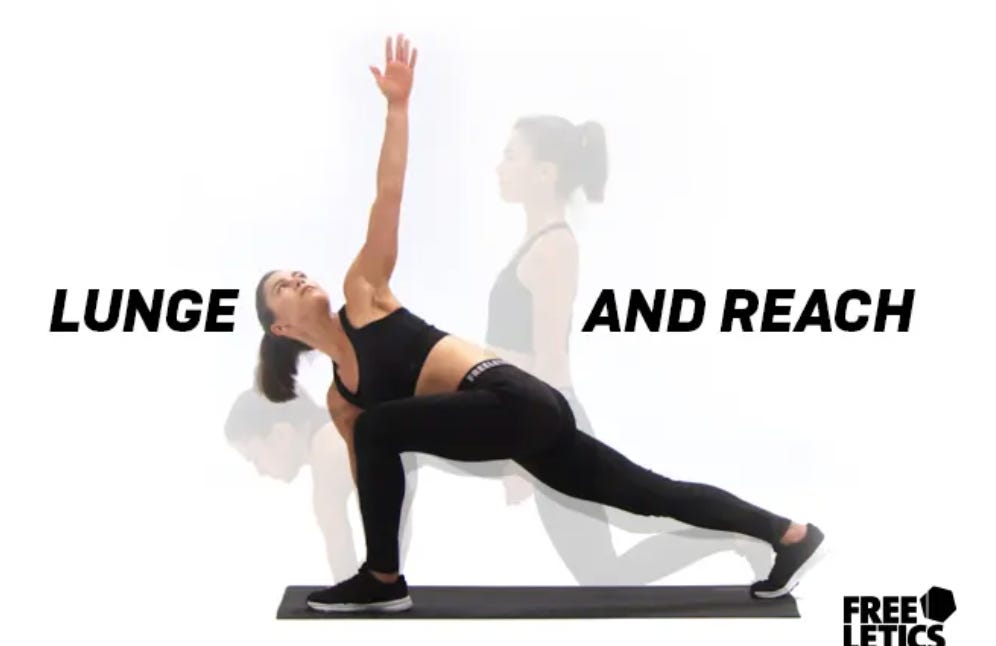
Most hip flexor stretches only target one structure — the rectus femoris or the iliopsoas in isolation.
The lunge-and-reach addresses both simultaneously — by adding an overhead lateral reach that increases the stretch through the entire anterior chain including the thoracolumbar fascia.
The overhead reach pulls the ipsilateral hip flexor into a deeper lengthening position than a standard lunge — reaching further into the range that sitting has been removing.
→ Lunge position. Front knee over ankle. Back knee on the ground. Simultaneously reach the same-side arm overhead and across toward the opposite side. Feel the stretch from the front of the hip through the side of the torso. That’s the entire anterior chain releasing — not just the hip flexor in isolation.
What Happens When the Hip Flexors Finally Let Go
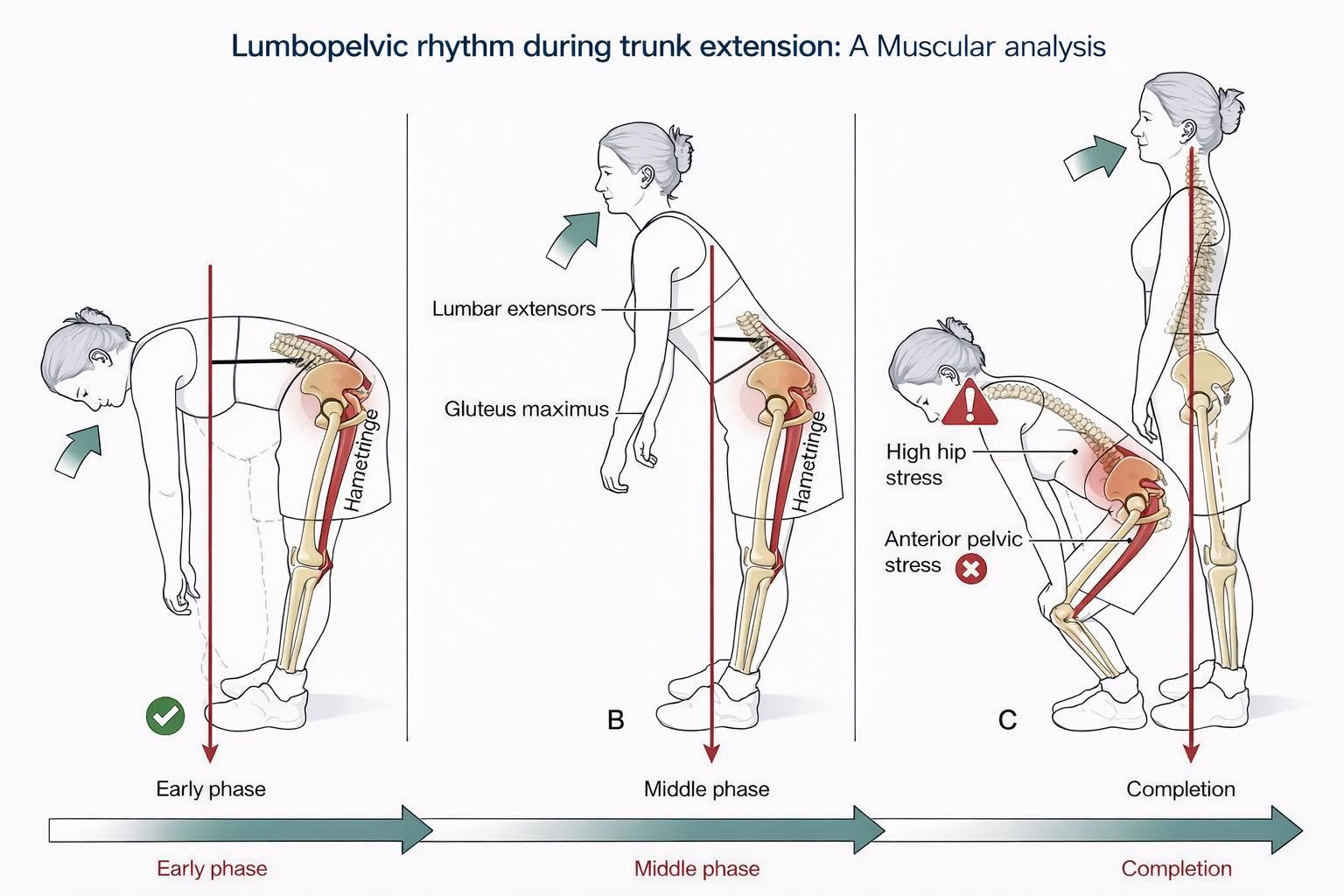
When hip flexor length is restored — the gluteus maximus gets its range back.
In the study, participants didn’t do a single glute exercise. Their gluteal power improved because the restriction limiting the range was removed — and the glute could finally reach full extension and generate force through the complete movement.
This is why the brand’s protocol has always started with Release — before Teach — before Strengthen.
The sequence isn’t preference. It’s mechanism.
→ The study’s finding confirms it: stretching tight hip flexors improves the movement conditions for the antagonist muscles — the hip extensors. Release first. The strength follows.
I want to know something specific about your situation.
When you do hip thrusts, squats, or glute bridges — what do you feel working most?
→ Mostly hamstrings and very little glute → Lower back taking over on heavy sets → One glute much weaker than the other → No real feeling in either glute regardless of exercise
Reply to this message with whichever one matches your situation
One line. That’s it.
I read every reply personally. If your pattern matches what I recognise — I’ll tell you exactly which hip flexor is causing it and where to start releasing it.
─────────────────────────────
Here’s the exact lunge-and-reach protocol from the study — the form cues, the daily timing, the 6-week progression, and the reason the ipsilateral arm reach is what makes this stretch different from every standard hip flexor stretch you’ve already tried.
The full Hip Flexor Release Protocol is inside — exact form cues, daily timing, progressions, and the week-by-week timeline for when your glutes start firing properly.
The Hip Flexor Release Protocol: Release → Restore → Reload
THE STUDY PROTOCOL — EXACTLY:
