
More exercise made your back pain worse

You added morning gym sessions to fix your back.
Your back got worse.
A 2026 cross-sectional study of 1,665 full-time workers found that replacing sedentary time or light activity with more intense physical activity was associated with increased probability of moderate-to-severe back and neck/shoulder pain.
Replacing any behaviour with more sleep was associated with significantly decreased pain
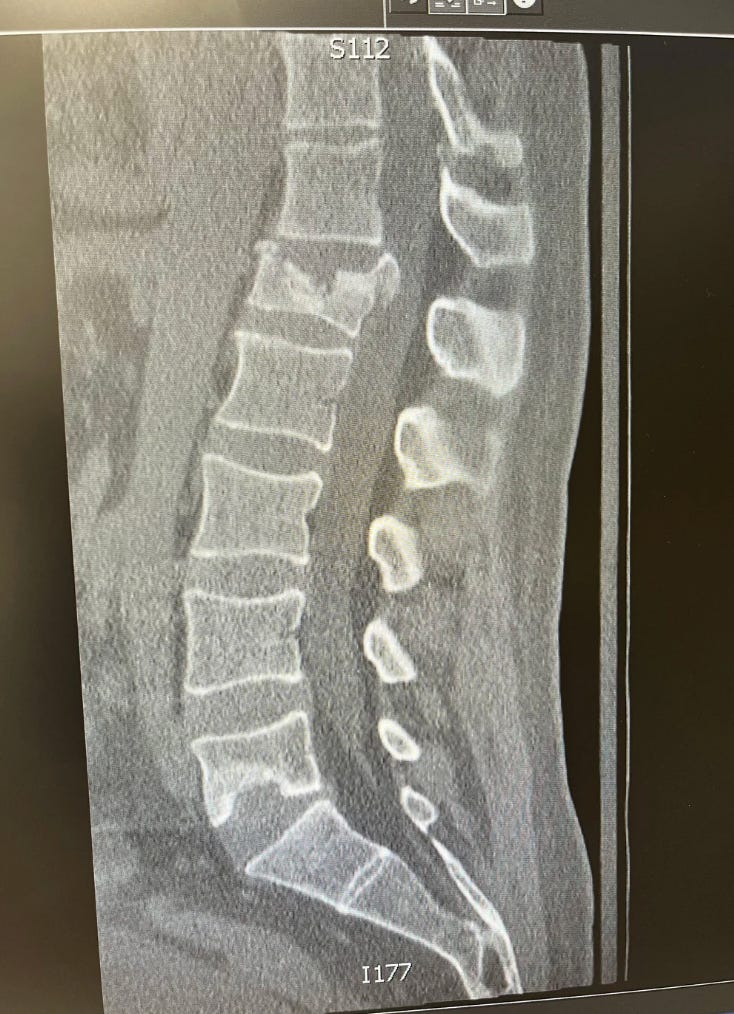
The problem isn’t that you’re not moving enough. The problem is where the movement is coming from in your 24-hour budget — and what it’s replacing.
A 38-year-old operations manager in Lyon had been waking at 5:45am to train before work for four months.
He was doing everything right. Gym three times a week. Step count up. Sitting less.
His neck and shoulder pain was worse than before he started.
The 2026 study would have identified his pattern immediately: replacing sleep with more intense physical activity — moving the budget in exactly the wrong direction.
His problem wasn’t the gym. It was the 6 hours of sleep the gym was coming from.
If your back or neck pain has stayed the same or worsened despite adding more exercise — the exercise may be coming at the cost of the one behaviour the 2026 study found most protective: sleep.
Your 24 hours is a fixed budget. Every behaviour gains time from somewhere else. The study’s compositional analysis confirmed that the source of the time matters as much as the activity itself.
More sleep at the expense of anything else — exercise, sedentary time, light activity — was associated with reduced pain. More exercise at the expense of sleep moved pain in the wrong direction.
A 2026 cross-sectional study published in PLOS ONE analysed 1,665 full-time workers using compositional logistic regression — a method that accounts for the fact that 24-hour behaviours are interdependent. Time gained in one behaviour must come from another.
Increased sleep was associated with lower odds of moderate-to-severe low back pain (AOR = 0.54, 95% CI = 0.40–0.72) — a 46% reduction in odds.
Increased sleep was associated with lower odds of neck/shoulder pain (AOR = 0.60, 95% CI = 0.45–0.80) — a 40% reduction in odds.
Replacing sedentary time with light-intensity activity: AOR = 1.45 for LBP — increased odds of pain.
Replacing sedentary time with moderate-to-vigorous activity: AOR = 1.17 for LBP — also increased odds.
Reallocating time to sleep from any other behaviour — including physical activity — was associated with decreased probability of both back and neck/shoulder pain.
[Source: Kitayama A et al. Association of the 24-hour movement behaviours composition with workers’ chronic musculoskeletal pain. PLoS One. 2026;21(4):e0346414. PMID: 41931490 → https://pubmed.ncbi.nlm.nih.gov/41931490/]
WHAT EVERYONE TRIES:
Adding more exercise — gym sessions, step targets, replacing desk time with movement — to address chronic back and neck pain
WHY IT FAILS:
The compositional analysis confirmed that more intense physical activity, when it replaces sleep in a fixed 24-hour budget, is associated with increased not decreased pain probability. The standard “move more” advice ignores where the movement is coming from. Exercise that comes from sleep time removes the most protective behaviour in the pain equation.
WHAT WORKS:
Protect sleep first. Then redistribute the remaining hours — reducing sedentary blocks and adding movement within the waking day without compromising sleep duration.
Why the Compositional Approach Changes Everything
Standard studies ask: does exercise reduce pain? Yes — often.
But they don’t ask: where does the exercise time come from?
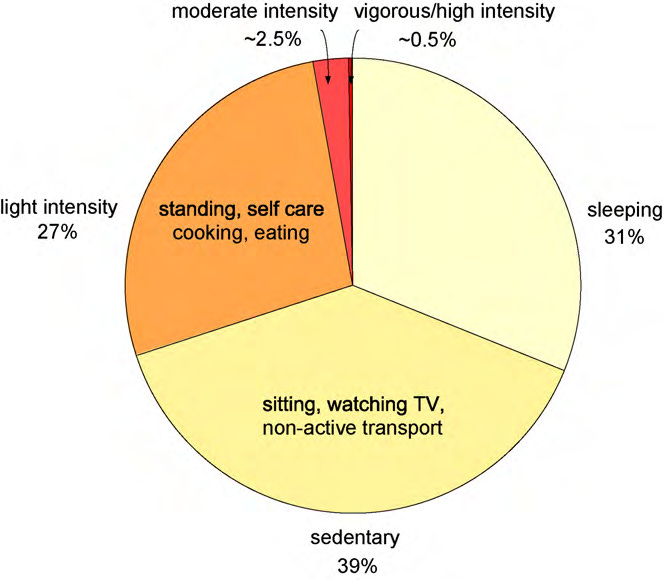
The compositional method treats the 24 hours as a closed system. Every minute of exercise must come from sleep, sedentary time, or light activity. The result changes depending on the source.
The study confirmed: exercise reallocated from sedentary time produced different outcomes than exercise reallocated from sleep. The gain in movement was the same. The pain outcomes were not.
This is why “just move more” advice fails for people who are already sleep-deprived. They move more by sleeping less. The compositional balance moves in the wrong direction. Pain worsens.
The Sleep Mechanism
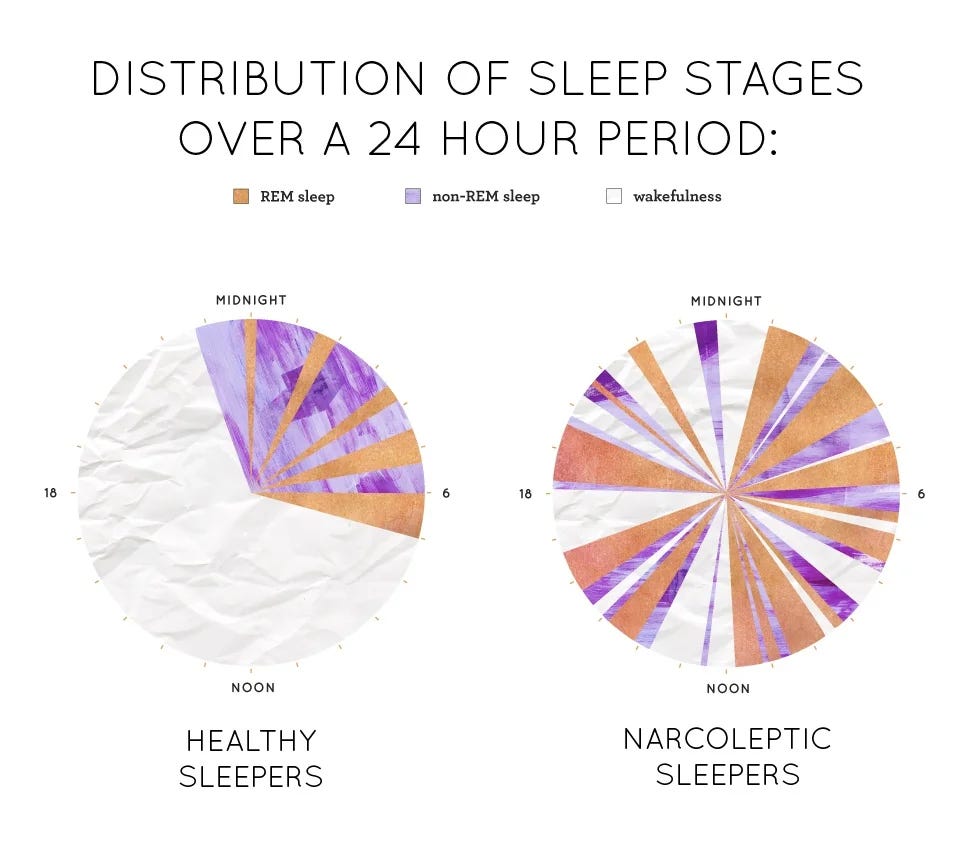
Sleep reduces musculoskeletal pain through three mechanisms the study doesn’t fully detail but the research supports.
First — slow-wave sleep restores the nervous system’s pain threshold. One night of reduced slow-wave sleep measurably lowers pain tolerance the following day.
Second — sleep restricts inflammatory cytokines. IL-6 and TNF-alpha — the inflammatory markers associated with musculoskeletal pain sensitisation — rise with sleep disruption. The study’s finding that sleep reduced pain odds by 40–46% likely reflects this anti-inflammatory mechanism.
Third — sleep rebuilds the muscle tissue that desk work and exercise both stress. The repair process that reduces next-day muscle tension and soreness happens during deep sleep. Less sleep means starting the next day from a higher tissue load baseline.
The study names the sleep-pain association clearly but doesn’t cover why sleep is anti-inflammatory at the cellular level. That mechanism runs partly through gut microbiome health — poor sleep alters gut bacteria composition within 48 hours, which drives systemic inflammatory markers upward. Coach Dylan went into the specific research on this in You’re not fat. Your gut is starving, including why fermented foods may support the gut-sleep-inflammation link in ways fibre alone doesn’t.
Which of these matches your situation:
→ Added more exercise recently — back or neck pain unchanged or worse
→ Sleeping less than 7 hours — early starts or late finishes to fit training in
→ Pain levels vary day to day — worse after short sleep nights specifically
→ Sitting most of the day with occasional intense exercise — no light activity between
→ Back or neck pain that’s been present for more than 3 months despite moving more
Reply with whichever one matches.
Here’s the exact 24-hour behaviour reallocation protocol — sleep protection, light activity integration, sedentary reduction, and the weekly structure that moves the compositional balance in the direction the study found most protective.
The 24-Hour Pain Reset:
Protect → Redistribute → Integrate → Maintain
THE CORE PRINCIPLE:
The study’s finding is compositional — not additive.
You cannot add sleep without removing something else. You cannot add exercise without removing something else.
The protocol works by identifying what to remove — sedentary blocks — and what to protect — sleep — before deciding where to put the recovered time.
The sequence matters: protect sleep first, then redistribute the waking hours. Reversing this order produces the pattern the study found associated with worse pain outcomes.
Phase 1: Sleep Floor — Non-Negotiable
(7–9 hours — set this before changing anything else)
The study found sleep was the behaviour most favourably associated with reduced pain probability. Any protocol that starts by adding exercise without first confirming adequate sleep is starting in the wrong place.
Set your sleep floor:
Count backward from your required wake time. 7.5 hours minimum. This is the fixed anchor. Everything else fits around it.
If your current exercise schedule requires waking before this anchor — the schedule needs to change, not the sleep.
Why 7.5 hours not 7: Sleep occurs in 90-minute cycles. 7.5 hours = 5 complete cycles. Cutting to 7 hours mid-cycle produces worse recovery than the 30-minute difference suggests. The cut always lands in slow-wave or REM — the stages most relevant to pain threshold restoration.
The shift most people need: Moving exercise from 6am to lunchtime or evening preserves the sleep floor without reducing training frequency. Same volume. Different timing. Better pain outcomes.
